

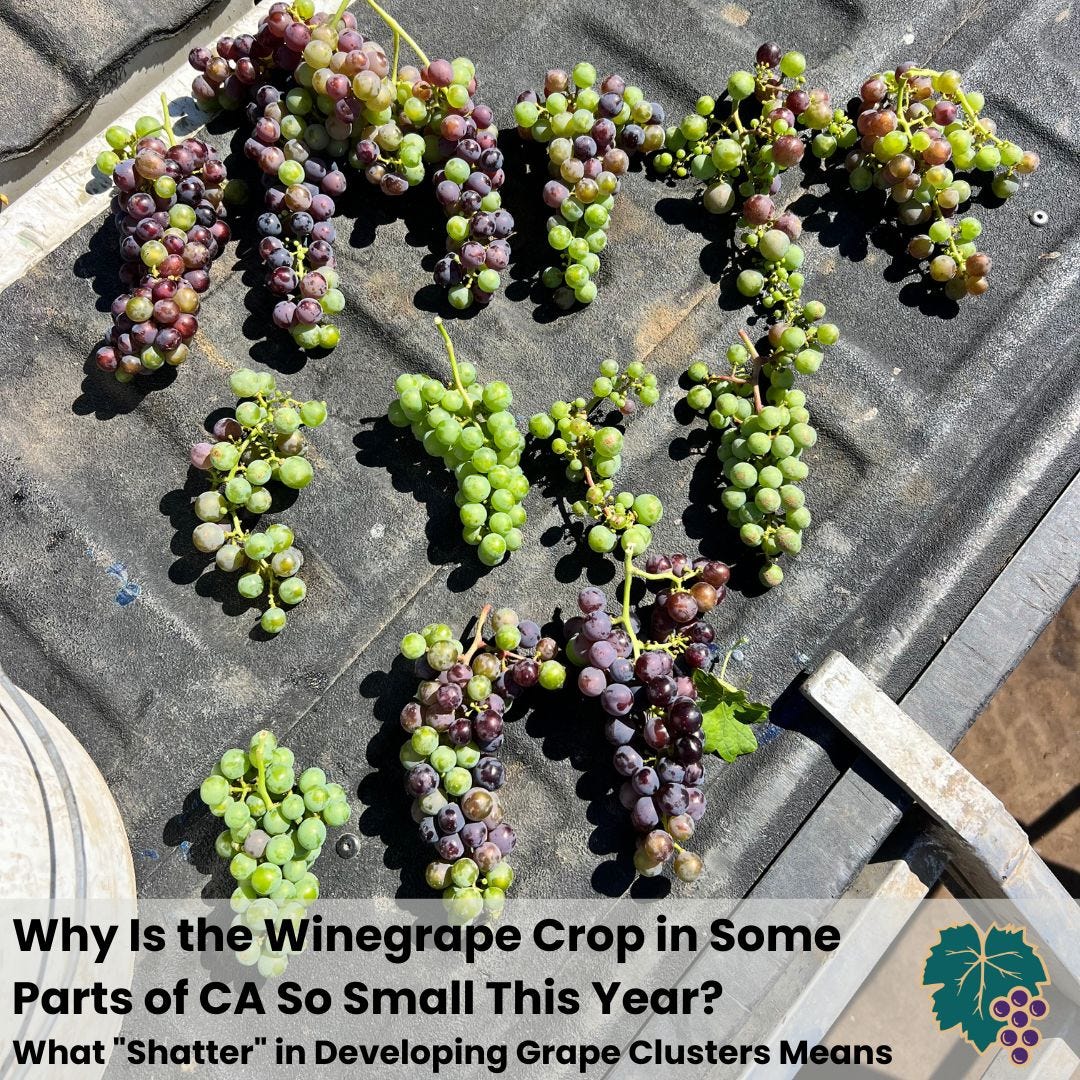
Vintage 2026 has kicked off in many wine growing regions throughout California over the last couple weeks. While it isn’t unheard of to begin harvesting white wine grapes and grapes destined for sparkling wine in July, it is unusual. For some of California’s long-time growers, this is the earliest harvest they’ve seen in their careers.
The closest comparison growers recall in recent years was 2015, an early vintage when ongoing drought conditions defined the growing season. This year is different. A warm (but still mildly wet) February led to early budbreak, the term for when the green part of the plant starts to show. Soaring temperatures in March resulted in accelerated development, with shoots in some parts of the state reaching a foot in length by early April—growth that typically wouldn’t occur until late spring.
Heat (up to about 95°F) is like protein powder for grapevines. Grapevine metabolism is generally optimal between 75-85°F, and is active at temperatures above 50°F. Shoots can grow up to 10-12 inches per week during periods of rapid growth.
When a heat spell that accelerates growth happens early enough in the season that typical conditions like spring rain, fog, and wind are still expected to occur, it can spell disaster.
Luckily for most winegrowing regions in California, catastrophic spring weather events like frosts or extreme hail that often plague other growing regions around the world are less likely.
But the weather doesn’t have to be extreme to have an enormous effect. This year’s light crop is a direct result of “shatter”—industry lingo to describe a grape cluster that has many open gaps on the stem where grapes should have been, but are missing. Where did they go?
Imagine a cherry tree in full bloom, delicate pink blossoms fluttering in the wind on a cloudy day. It starts to rain and the wind picks up. The luckiest of those pink petals hang limp and waterlogged, likely to mold and fall off, while most of them have already been thrashed to the ground. In a year with these conditions, the cherry crop is small.
While many people don’t have the opportunity to witness the life of a grape before they see its final form, each grape in a cluster was too once a flower. Although the grape flower does not have obvious petals, the flower organs are still susceptible to detrimental weather events. Flowers are usually only open for one to three weeks. And when they are in bloom—especially when they are out much earlier than usual like this year—the risk of a looming weather event inflicting damage is high.
The severity of shatter varies significantly by region, variety, vineyard, and even individual blocks within a vineyard. While some growers are experiencing substantial crop losses, others have seen only minimal impacts, making this a highly localized issue across California’s wine regions.
After the heat spell in March, spring weather returned to a more typical pattern, alternating between rain showers and cool days. For vines that were cruising along thinking it was already late spring and happened to be in bloom, the change in weather played a defining role in limiting their ultimate output for the year.
A fruitful grapevine shoot will usually produce one to three flower clusters per shoot. Some estimates say the percentage decrease in yield due to extreme shatter can be up to 80%, with moderate shatter considered about 20%. This harvest, growers in some regions are anticipating yield to be down approximately 50%.
It’s worth noting that shatter is not the only issue at play when it comes to decreased yields. After a season with a heavier than usual crop like 2025, grapevines tend to regulate themselves by producing a lighter crop the following year. This year, some growers are seeing vineyards with cluster sizes that are around 30% smaller than last year—before shatter has even been taken into account.
While the biological reasons behind this year’s lighter crop are important, they come against the backdrop of broader economic challenges facing California winegrape growers. Many vineyards continue to contend with rising production costs, weak grape demand, and reduced profitability. Although a smaller crop may help bring supply more in line with demand over time, lower yields also reduce revenue for growers whose costs remain largely unchanged.
But as many in the industry have already mentioned, a light crop this year may not be the unfortunate news that it usually is. Perhaps nature working in tandem with California’s growers will help rebalance the supply of winegrapes. The road ahead, however, will require more than nature’s help. It will take renewed consumer demand, fair competition, and continued investment in the growers who are the foundation of California wine.